
Best Sci-Fi Movies of All Time: 40 Must-Watch Films
From 2001: A Space Odyssey to Dune, these are the 40 greatest science fiction films ever made, spanning space operas, dystopias, time travel, and first contact stories.
MovlyHub Team
March 2, 2026
Science fiction is the genre of ideas. While other genres explore what is, sci-fi explores what could be, what might be, and what we fear will be. The best science fiction films don't just dazzle with visual effects — they use speculative premises to illuminate something true about human nature, society, or our place in the universe. Here are 40 films that represent the genre at its finest, from cerebral art-house experiments to crowd-pleasing space adventures.
The All-Time Greats
2001: A Space Odyssey (1968)
Stanley Kubrick's cosmic masterpiece remains the gold standard for cinematic science fiction. From the Dawn of Man sequence to the psychedelic Star Gate and that enigmatic final shot, the film asks questions about evolution, technology, and human purpose that it deliberately refuses to answer. The visual effects, created entirely with practical techniques and optical printing, are still astonishing. HAL 9000's calm malevolence has become the archetype for AI gone wrong. It demands patience, but the payoff is a film that stays with you for the rest of your life.
Blade Runner (1982) / Blade Runner 2049 (2017)
Ridley Scott's original defined the visual language of cyberpunk — neon-drenched streets, perpetual rain, towering advertisements — and posed a question that grows more relevant every year: what makes someone human? Harrison Ford's Deckard hunts rogue replicants in a Los Angeles of 2019, but the film's sympathies lie with the artificial beings fighting for their right to exist. Denis Villeneuve's sequel, arriving 35 years later, is that rarest of things: a follow-up that matches the original in ambition and artistry. Ryan Gosling's performance is quietly devastating, and Roger Deakins' cinematography won a richly deserved Oscar.
Alien (1979)
In space, no one can hear you scream — and no one can help you either. Ridley Scott's second entry on this list transformed a B-movie monster concept into a claustrophobic masterpiece of atmosphere and dread. The Nostromo feels like a real working vessel, H.R. Giger's creature design is nightmarishly sexual and organic, and Sigourney Weaver's Ripley became science fiction's most iconic survivor. The dinner scene remains one of cinema's greatest shocks.
The Matrix (1999)
The Wachowskis synthesized philosophy, cyberpunk, Hong Kong martial arts, and anime into a blockbuster that redefined action cinema. "What is the Matrix?" became a cultural catchphrase, bullet time became a visual standard, and the film's central metaphor — that reality itself might be a simulation — anticipated conversations that would dominate tech culture decades later. Keanu Reeves was the perfect vessel for Neo: blank enough to project onto, earnest enough to root for.
Solaris (1972)
Andrei Tarkovsky's response to 2001 swaps Kubrick's cold precision for something warmer and more melancholic. A psychologist arrives at a space station orbiting the planet Solaris, where the ocean seems to be manifesting physical versions of the crew's memories and regrets. It's less about outer space than inner space — a meditation on love, loss, and the impossibility of truly knowing another person. Slow, beautiful, and deeply human.
Space Exploration and First Contact
Arrival (2016)
Denis Villeneuve's third appearance on this list is also his most emotionally devastating. Amy Adams plays a linguist recruited to communicate with aliens who have landed on Earth, and the film uses the challenge of understanding a truly alien language to explore how language shapes perception of time itself. The structural twist — revealed gradually rather than as a shock — reframes the entire film and will leave you in tears.
Close Encounters of the Third Kind (1977)
Spielberg's alien contact film replaces the hostility of most invasion stories with wonder and obsession. Richard Dreyfuss's increasingly manic quest to reach the aliens is simultaneously funny, disturbing, and ultimately transcendent. The final sequence at Devils Tower is pure cinema — visual storytelling at its most emotionally overwhelming.
Interstellar (2014)
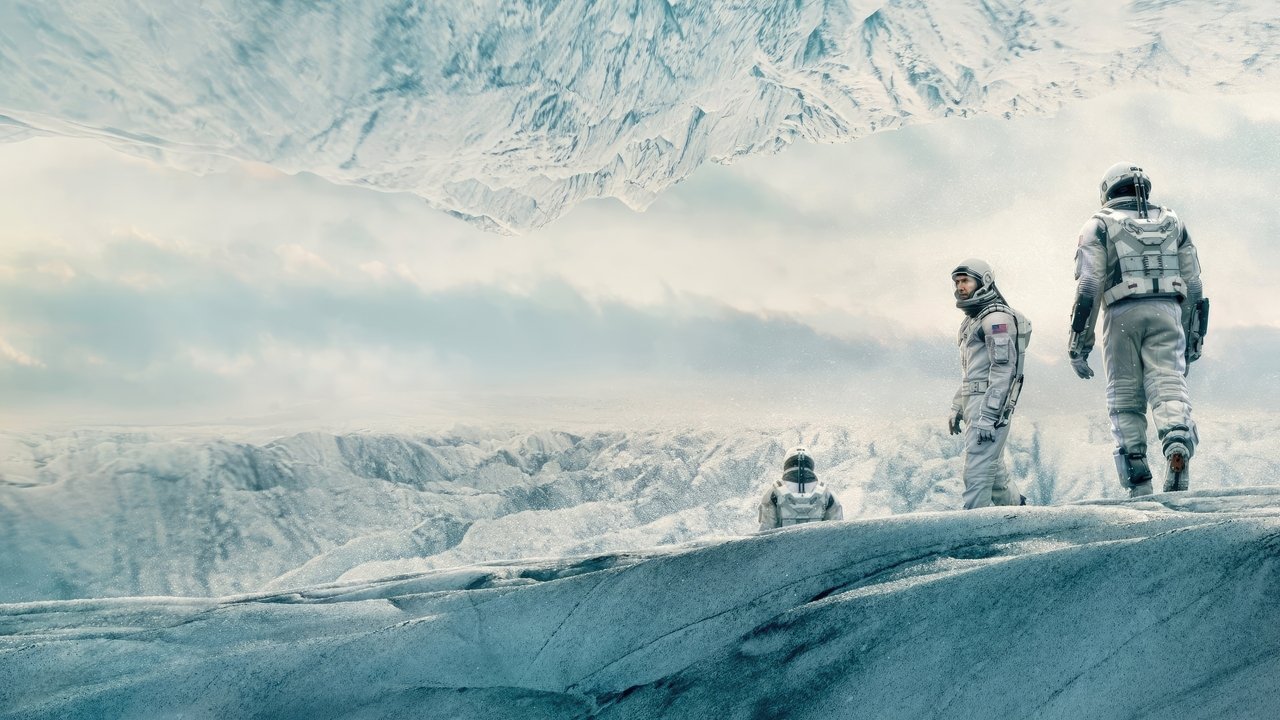
Christopher Nolan goes big — really big — with a story about a pilot who travels through a wormhole to find a new home for humanity. The science (advised by physicist Kip Thorne) is more rigorous than most sci-fi blockbusters, and the emotional core — a father's relationship with his daughter across time and space — gives the spectacle genuine weight. The docking scene and the tesseract sequence are unforgettable. Hans Zimmer's organ score is overwhelming in the best sense.
Contact (1997)
Robert Zemeckis adapted Carl Sagan's novel about the first confirmed signal from extraterrestrial intelligence. Jodie Foster plays a scientist navigating institutional resistance, religious opposition, and her own grief as she pursues the signal's implications. The film treats both science and faith with unusual respect, and its central question — whether humanity is ready for contact — remains potent.
Gravity (2013)
Alfonso Cuaron's technical marvel strands Sandra Bullock in orbit after a satellite debris field destroys her space shuttle. At 91 minutes, it's essentially a real-time survival thriller set in the most hostile environment imaginable. The long takes, Emmanuel Lubezki's cinematography, and the sound design (using the silence of space to devastating effect) create an experience that demands the largest screen available.
Dystopias and Cautionary Tales
Children of Men (2006)
Alfonso Cuaron again, this time adapting P.D. James's novel about a near-future world where humanity has become infertile. Clive Owen navigates a collapsing Britain to protect the first pregnant woman in 18 years. The film's unbroken tracking shots through war zones are technically astounding, and its vision of societal collapse through apathy rather than spectacle feels uncomfortably plausible.
Metropolis (1927)
Fritz Lang's silent masterpiece imagined a future city divided between privileged elites and oppressed workers nearly a century ago, and its class critique has only sharpened with time. The visual design — towering Art Deco skyscrapers, underground factories, the iconic robot Maria — has influenced every cinematic vision of the future that followed.
A Clockwork Orange (1971)
Kubrick's adaptation of Anthony Burgess's novel about juvenile violence and state-imposed behavioral conditioning is as provocative now as it was in 1971. Malcolm McDowell's Alex is a monster who becomes a victim, and the film forces viewers to confront uncomfortable questions about free will, punishment, and the nature of morality.
Mad Max: Fury Road (2015)
George Miller reinvented the post-apocalyptic genre at age 70 with a two-hour chase sequence that is the purest expression of action cinema ever filmed. Charlize Theron's Furiosa is the real protagonist, leading an escape from a tyrannical warlord across a desert wasteland. Every vehicle, costume, and stunt was practical. It's the rare blockbuster that is simultaneously art.
District 9 (2009)
Neill Blomkamp's feature debut uses an alien refugee camp in Johannesburg as an unmistakable apartheid allegory. Sharlto Copley's bureaucrat-turned-fugitive undergoes one of sci-fi's most literal transformations, and the film balances social commentary with genuinely exciting action. Made for $30 million, it outclasses blockbusters that cost ten times as much.
Time Travel and Alternate Realities
Back to the Future (1985)
The most entertaining time-travel film ever made. Robert Zemeckis and Bob Gale's screenplay is a Swiss watch of setup and payoff, and Michael J. Fox has never been more charismatic. The DeLorean, the Enchantment Under the Sea dance, "1.21 gigawatts!" — it's pure cinema joy.
Primer (2004)
Made for $7,000, Shane Carruth's debut is the most intellectually rigorous time-travel film in existence. Two engineers accidentally build a time machine in their garage, and the film trusts its audience to keep up with the increasingly complex consequences. You will need a diagram. You will still be confused. You will want to watch it again immediately.
12 Monkeys (1995)
Terry Gilliam sends Bruce Willis back in time to prevent a plague that wiped out most of humanity. Brad Pitt earned an Oscar nomination for his unhinged performance as a mental patient who may or may not hold the key to the apocalypse. The film's circular logic and ambiguous ending are deeply satisfying for viewers willing to engage with its puzzle.
Edge of Tomorrow (2014)
Tom Cruise relives the same alien-invasion battle day after day in what is essentially a sci-fi Groundhog Day with exoskeletons. It's the most rewatchable sci-fi action film of the 2010s — tight, funny, and inventive in how it uses the time-loop premise to build both tension and character.
Everything Everywhere All at Once (2022)
The Daniels' multiverse-hopping epic uses the concept of infinite parallel realities to tell a story about a mother and daughter who can't communicate. Michelle Yeoh won a deserved Oscar for her performance, and the film balances absurdist comedy (hot dog fingers, a raccoon puppet) with moments of genuine emotional devastation. It's the rare film that feels like nothing you've ever seen before.
More Essential Sci-Fi to Explore
- Dune (2021) and Dune: Part Two (2024) — Villeneuve finally cracked the unfilmable novel. Epic in every sense.
- Ex Machina (2014) — A chamber piece about artificial intelligence that is tense, smart, and deeply unsettling.
- The Thing (1982) — Carpenter's shape-shifting alien is horror-sci-fi perfection.
- Stalker (1979) — Another Tarkovsky masterwork, set in a mysterious Zone that grants wishes.
- Annihilation (2018) — Alex Garland's adaptation of Jeff VanderMeer's novel is psychedelic, terrifying, and hauntingly beautiful.
- Her (2013) — Joaquin Phoenix falls in love with an AI operating system. Spike Jonze made a film about technology that is deeply, achingly human.
- Moon (2009) — Sam Rockwell alone on a lunar mining base, questioning his reality. Simple premise, devastating execution.
- The Terminator (1984) / Terminator 2 (1991) — James Cameron created the definitive AI apocalypse story, then topped himself with the sequel.
- WALL-E (2008) — Pixar's environmental parable is also one of the great silent-film romances.
- Under the Skin (2013) — Scarlett Johansson as an alien predator in Scotland. Experimental and unforgettable.
- Eternal Sunshine of the Spotless Mind (2004) — Science fiction as romance. Memory erasure as metaphor for the pain of love.
Science fiction is at its best when it makes you think as much as it makes you feel. Whether you're drawn to the philosophical depths of Solaris or the pulse-pounding thrills of Edge of Tomorrow, there's a film on this list for every mood and mindset. Use MovlyHub to build your sci-fi watchlist, track your progress through the genre's greatest hits, and find where each title is streaming right now.