
Every Major Movie Franchise Ranked from Best to Worst
We ranked the biggest movie franchises in cinema history based on overall quality, consistency, cultural impact, and how well they stuck the landing.
MovlyHub Team
March 12, 2026
Movie franchises dominate modern cinema. The top-grossing films of most years belong to established series, and studios spend billions building interconnected universes they hope will sustain audiences for decades. But not all franchises are created equal. Some maintain remarkable consistency across multiple entries; others peak early and decline into diminishing returns. We've ranked the major franchises by weighing overall quality, consistency, cultural impact, and — crucially — whether they knew when to end.
The Elite Tier
1. The Lord of the Rings
Peter Jackson's trilogy is the gold standard for franchise filmmaking. Three films, three masterpieces, one continuous story told with escalating ambition and consistent quality. The practical effects, the New Zealand landscapes, Howard Shore's score, and the ensemble performances create a cinematic world that feels truly complete. The Return of the King earned its Best Picture Oscar. The Hobbit trilogy, while uneven, doesn't diminish what came before.
Best entry: The Return of the King. Weakest entry: The Hobbit: The Battle of the Five Armies. Consistency score: 9/10 (original trilogy only).
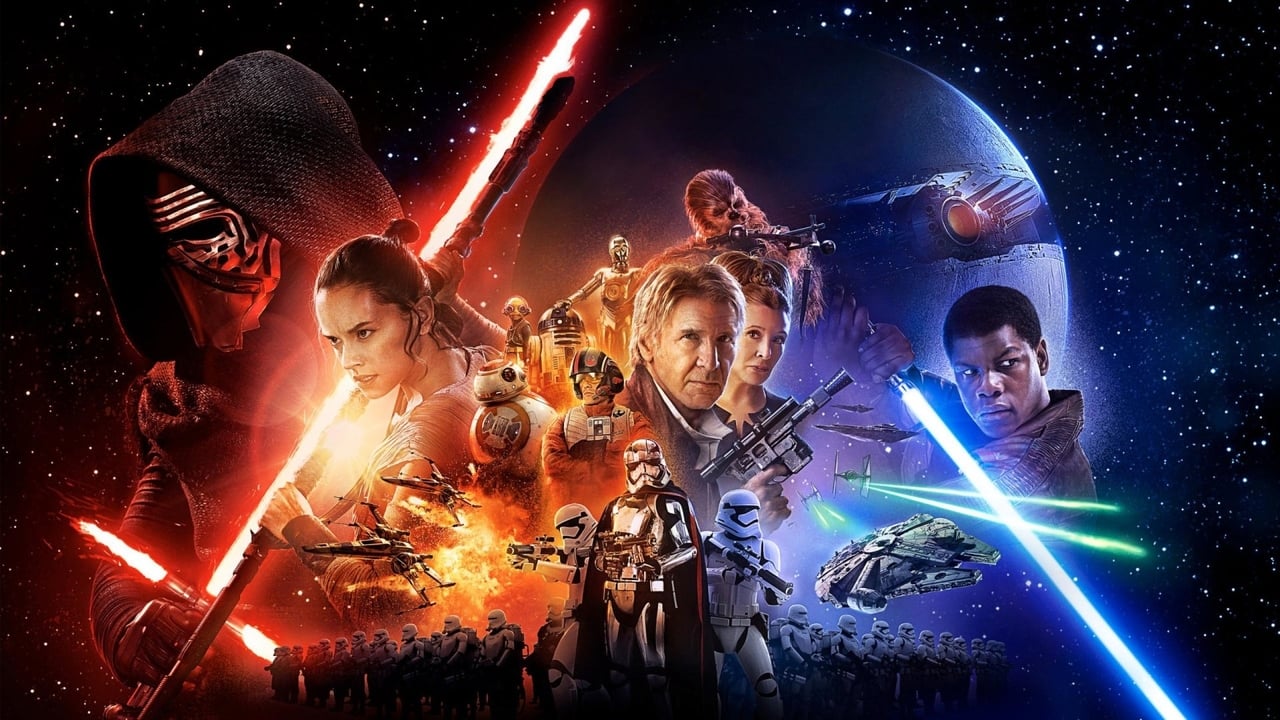
2. Star Wars (Original Trilogy)
The franchise that created modern blockbuster cinema. A New Hope, The Empire Strikes Back, and Return of the Jedi remain the most culturally significant trilogy in film history. The prequel trilogy has its passionate defenders. The sequel trilogy is more divisive. The standalone films (Rogue One, Solo) are solid. But the original three films? They're essentially perfect popular entertainment.
Best entry: The Empire Strikes Back. Weakest entry: The Rise of Skywalker. Consistency score: 6/10 (across all films).
3. The Dark Knight Trilogy
Christopher Nolan took the superhero genre seriously — some would say too seriously — and produced three films that function as a coherent character study of Bruce Wayne. Batman Begins is a strong origin story. The Dark Knight is a genuine masterpiece, elevated by Heath Ledger's legendary Joker. The Dark Knight Rises is the weakest link but still a satisfying conclusion. No franchise has maintained this level of thematic ambition.
Best entry: The Dark Knight. Weakest entry: The Dark Knight Rises. Consistency score: 9/10.
4. Toy Story
Pixar's flagship franchise is an anomaly: four films, all of which are excellent, each finding new emotional territory to explore within the same premise. The series uses the metaphor of toys being outgrown to tell stories about childhood, mortality, purpose, and letting go. Toy Story 3's incinerator scene and Toy Story 4's ending are among Pixar's most emotionally devastating moments.
Best entry: Toy Story 3. Weakest entry: Toy Story 4 (only by the slimmest of margins). Consistency score: 10/10.
The Strong Tier
5. Mad Max
The original Mad Max (1979) was a scrappy Australian indie. The Road Warrior (1981) was a quantum leap. Beyond Thunderdome (1985) was uneven. Then George Miller returned at 70 to make Fury Road (2015), widely considered one of the greatest action films ever made. Furiosa (2024) proved there's still creative fuel in the tank. The franchise's willingness to reinvent itself keeps it vital.
6. Indiana Jones
Raiders of the Lost Ark is a near-perfect adventure film. The Last Crusade adds Sean Connery and matches the original's charm. Temple of Doom is darker and divisive. Crystal Skull and The Dial of Destiny are diminishing returns. But the first and third films are so good that the franchise's average remains high despite the later entries.
7. The Marvel Cinematic Universe
The most commercially successful franchise in history, with over 35 films generating tens of billions of dollars. At its best (Winter Soldier, Infinity War, Endgame, Guardians of the Galaxy), the MCU produces crowd-pleasing entertainment with genuine emotional payoffs. At its worst, it feels like assembly-line content designed to feed a content cycle. The Multiverse Saga has been more inconsistent than the Infinity Saga, but the highs are still high.
8. Harry Potter
Eight films that grew up with their audience, maturing from whimsical children's adventures into genuinely dark young-adult stories. The casting was inspired across the board — Alan Rickman's Snape, Maggie Smith's McGonagall, Gary Oldman's Sirius Black — and the films captured the essence of J.K. Rowling's world-building even when compressing massive books. The Fantastic Beasts spinoffs, however, are a cautionary tale about overextending a franchise.
9. Planet of the Apes (Reboot Trilogy)
The most underrated franchise of the 2010s. Rise, Dawn, and War form a complete, emotionally devastating trilogy anchored by Andy Serkis' motion-capture performance as Caesar. The films use the sci-fi premise to explore themes of oppression, tribalism, and the cycle of violence with surprising sophistication. Kingdom of the Planet of the Apes (2024) proved the franchise could continue beyond Caesar's story.
The Mixed Tier
10. James Bond
The longest-running franchise in cinema, with 25 official films spanning over 60 years. The problem is consistency — the series has oscillated wildly between campy (Moore era), gritty (Craig era), and everything in between. The Daniel Craig run brought genuine dramatic weight, but the franchise's identity crisis means the overall experience is a roller coaster of quality.
11. Mission: Impossible
The franchise that defied the aging curve. While most series decline over time, Mission: Impossible got significantly better with each entry from Ghost Protocol onward. The practical stunt work is unparalleled in modern cinema, and Tom Cruise's commitment to physical filmmaking gives every entry genuine spectacle. Early entries are uneven; the recent ones are outstanding.
12. Alien
The first two films — Scott's horror masterpiece and Cameron's action masterpiece — are among the greatest sci-fi movies ever made. After that, it's been a steep decline. Alien 3 is an interesting failure, Resurrection is a campy mess, and the Prometheus/Covenant prequels frustrated audiences despite their ambition. The franchise's peak-to-valley ratio is among the most dramatic in cinema.
13. Batman (Overall)
If we look beyond Nolan's trilogy to include Burton, Schumacher, and Reeves' versions, the Batman franchise is wildly inconsistent. Burton's gothic vision, Schumacher's neon excess, Nolan's grounded realism, and Reeves' noir sensibility each create a radically different Batman. Some entries are among the best superhero films ever; others are among the worst.
14. Jurassic Park/World
Spielberg's original is a masterpiece of blockbuster filmmaking — the T-Rex breakout and the Velociraptors in the kitchen are timeless sequences. The Lost World is a solid sequel. Everything after that has been a diminishing exercise in "more dinosaurs, less wonder." The Jurassic World trilogy generated enormous revenue while losing what made the original special.
The Disappointing Tier
15. The Matrix
The original is a genuine masterpiece. Reloaded and Revolutions are ambitious but deeply flawed sequels that frustrated audiences with their philosophical detours. Resurrections (2021) was either a brilliant meta-commentary on unnecessary sequels or a deeply unnecessary sequel, depending on who you ask. A franchise that peaked with its first entry and never recovered.
16. Pirates of the Caribbean
The Curse of the Black Pearl is a legitimately great adventure film — funny, exciting, and anchored by Johnny Depp's Oscar-nominated Captain Jack Sparrow. But the law of diminishing returns hit hard. Each sequel was longer, louder, and less coherent than the last. By the fifth film, the magic was thoroughly gone.
17. DC Extended Universe
The most troubled franchise experiment of the 2010s. Individual films range from excellent (Wonder Woman) to incoherent (Justice League theatrical cut). The Snyder Cut proved there was a more ambitious vision behind the chaos, but the franchise never achieved the consistent identity that made the MCU work. James Gunn's reboot has brought renewed hope.
18. Transformers
Michael Bay's robot-smashing franchise made billions while receiving critical drubbings. The first film has a certain popcorn appeal, but the sequels descended into incoherent action and humor that aged poorly. Bumblebee (2018) was a critical course correction, but the franchise has struggled to build on that goodwill.
How to Navigate Long Franchises
- You don't have to watch everything. Life is short. Watch the best entries, read a plot summary for the rest if needed.
- Release order is usually best for first viewings. Prequels are designed to reward existing knowledge.
- Stop when you want to. If you loved the original trilogy, you're not obligated to watch the prequels, reboots, or spinoffs.
- Track your progress. MovlyHub lets you mark individual franchise entries as watched, so you always know where you left off and what's next.
Franchise filmmaking isn't going away — if anything, it's becoming more dominant. The key is being a selective viewer: watch the entries that excite you, skip the cash grabs, and don't feel obligated to complete a series just because you started it. Use MovlyHub to manage your franchise journeys, check streaming availability, and keep your watchlist organized across every universe.