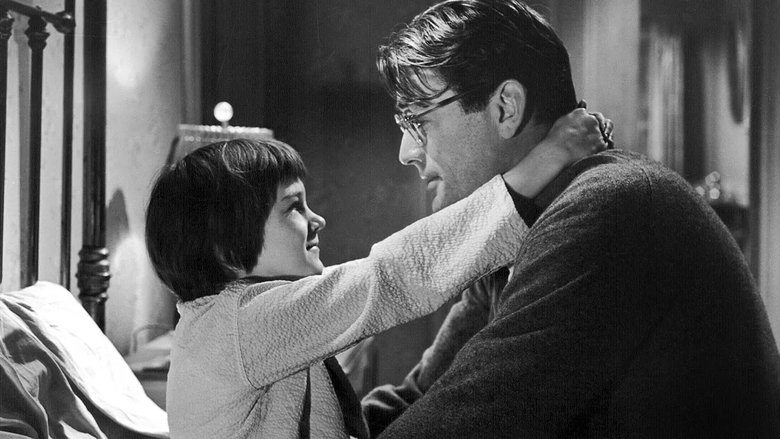
Scout Finch, 6, and her older brother Jem live in sleepy Maycomb, Alabama, spending much of their time with their friend Dill and spying on their reclusive and mysterious neighbor, Boo Radley. When Atticus, their widowed father and a respected lawyer, defends a black man named Tom Robinson against fabricated rape charges, the trial and tangent events expose the children to evils of racism and stereotyping.
*To Kill a Mockingbird* isn't just a classic film; it's an immersive journey into a specific time and place, viewed through the unvarnished eyes of childhood. The film excels at crafting an atmosphere of gentle, sun-dappled nostalgia, even as it delves into profoundly serious themes. Its black-and-white cinematography is not just stylistic but essential, lending an almost dreamlike quality to Maycomb, Alabama, making it feel both deeply personal and universally resonant. Watching it is an experience of quiet introspection, a film that doesn't rush to tell its story but lets it unfold with the unhurried pace of a hot Southern summer, slowly revealing layers of human nature with immense emotional weight. It's a film that stays with you, not for its spectacle, but for its profound humanity and enduring sense of moral conviction.
The true brilliance of *To Kill a Mockingbird* lies in its masterful performances and its unblinking, yet tender, portrayal of difficult truths. Gregory Peck’s Atticus Finch isn't merely a character; he embodies an ideal of quiet courage and integrity, a performance that remains the benchmark for moral fortitude in cinema. Equally compelling are the natural, unaffected portrayals by Mary Badham and Phillip Alford as Scout and Jem, whose youthful innocence provides a vital lens through which the film's stark realities are filtered. Director Robert Mulligan handles the sensitive subject matter with remarkable grace, ensuring that the film’s emotional impact comes from genuine character interaction and understated drama, rather than overt manipulation. The adaptation of Harper Lee's novel is exquisite, preserving its timeless message about empathy, justice, and the fight against prejudice.
If you're a viewer who values deliberate storytelling, deep character studies, and films that spark genuine reflection, *To Kill a Mockingbird* is an absolute must-watch. This isn't a film designed for fast-paced entertainment; it's an experience to be savored, perfect for those who appreciate cinema that tackles weighty moral questions with nuance and dignity. Expect to be moved by a powerful narrative that challenges perceptions of right and wrong, and to witness a quiet heroism that resonates long after the credits roll. It's ideal for anyone seeking a timeless drama about courage, empathy, and the often-painful transition from childhood innocence to a broader understanding of the world’s complexities, offering both a poignant look back and a vital lesson for today.
